Exploring the Mathematics of Public Health Epidemiology
Where applied mathematics meets public health practice
Dr. Gregory V. Fant’s Applied Calculus for Public Health Epidemiology bridges the gap between theoretical mathematics and real-world health systems. Designed for epidemiologists, analysts, and public health professionals, this handbook demonstrates how calculus concepts—like rate of change, accumulation, and differential equations—translate directly into practical tools for outbreak modeling, disease surveillance, and system performance analysis. A practical guide for those who use data to protect communities. With step-by-step examples, case studies, and optional Python code, the book equips professionals with the analytical framework to interpret public health data with precision and confidence.
APPLIED CALCULUS for Public Health epidemiology
About the Book
Applied Calculus for Public Health Epidemiology. This monograph presents applied calculus as a practical toolkit for public health professionals. It introduces fundamental concepts—functions, derivatives, integration, exponential growth, and first-order differential equations—through the lens of real-world epidemiology.
Readers will learn how mathematical reasoning supports:
- Outbreak growth modeling and intervention timing
- Cumulative disease burden estimation
- Forecasting and health resource planning
- Program evaluation and operational efficiency
Each chapter includes worked examples, checkpoint questions, and optional Python exercises for hands-on practice. The handbook transforms mathematical theory into applied analytical power—supporting faster, smarter, and evidence-based public health decisions.
Elevate your analytical toolkit. Learn how calculus reveals the patterns behind every epidemic.
Gregory V. Fant, DSc, PhD, MACE
About the Author
Public Health Epidemiologist & Educator
Dr. Gregory V. Fant is a public health epidemiologist with over twenty-five years of public service in applied epidemiology, statistics, and health informatics. His work integrates mathematics and data science to strengthen surveillance systems, disease modeling, and data-driven decision-making in population health.
He works with international efforts to advance professional capacity development in public health analytics and applied learning worldwide. Dr. Fant earned two doctorates: Higher doctorate in DSc-Health Sciences (Epidemiology) and first doctorate in PhD-Health Studies (Applied Statistics and Research Methods). He is a long standing Member of the American College of Epidemiology (MACE).
His publications emphasize clarity, transparency, and practical application in professional public health education and decision support.
Gregory V. Fant, DSc, PhD, MACE
About the Author
Public Health Epidemiologist & Educator
Dr. Gregory V. Fant is a public health epidemiologist with over twenty-five years of public service in applied epidemiology, statistics, and health informatics. His work integrates mathematics and data science to strengthen surveillance systems, disease modeling, and data-driven decision-making in population health.
He currently serves with JSPH-International, Boston, advancing professional capacity development in public health analytics and applied learning worldwide. Dr. Fant holds dual doctorates in Health Sciences (Epidemiology) and Health Studies (Applied Statistics and Research Methods) and is a long-standing Member of the American College of Epidemiology (MACE).
His publications emphasize clarity, transparency, and practical application in professional public health education and decision support.
This handbook fills a critical gap in public health education. Dr. Fant translates applied calculus into clear, operational tools that epidemiologists can actually use. The step-by-step examples, real surveillance scenarios, and thoughtful integration of Python make complex concepts accessible without sacrificing rigor. This is a valuable resource for both students and experienced practitioners.
Applied Calculus for Public Health Epidemiology bridges theory and practice in a way few resources do. The focus on rates of change, cumulative burden, and outbreak dynamics mirrors real-world decision-making in surveillance and response. This handbook strengthens analytic thinking and directly supports better public health action.
This book demystifies calculus for public health professionals. By grounding every concept in disease modeling, surveillance data, and operational planning, it empowers epidemiologists to move beyond descriptive statistics and anticipate trends with confidence. A practical, timely, and much-needed contribution to the field.
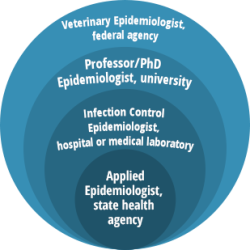
Latest Blogs
Quick Facts: Epidemiologist
The information piece, below, is a high-level description of what I do as a public health epidemiologist. See this information…
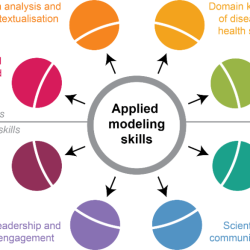
Mathematical Modeling in Public Health…
Siller HS, Elschenbroich HJ, Greefrath G, Vorhölter K. Mathematical modelling of exponential growth as a rich learning environment for mathematics…
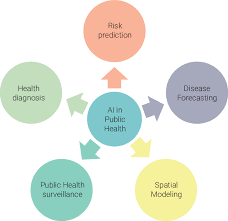
AI in Public Health-Academic Perspective
Bavli I, Galea S. Key considerations in the adoption of Artificial Intelligence in public health. PLOS Digit Health. 2024 Jul…